
Mom’s Old-Fashioned Vegetable Beef Soup Recipe
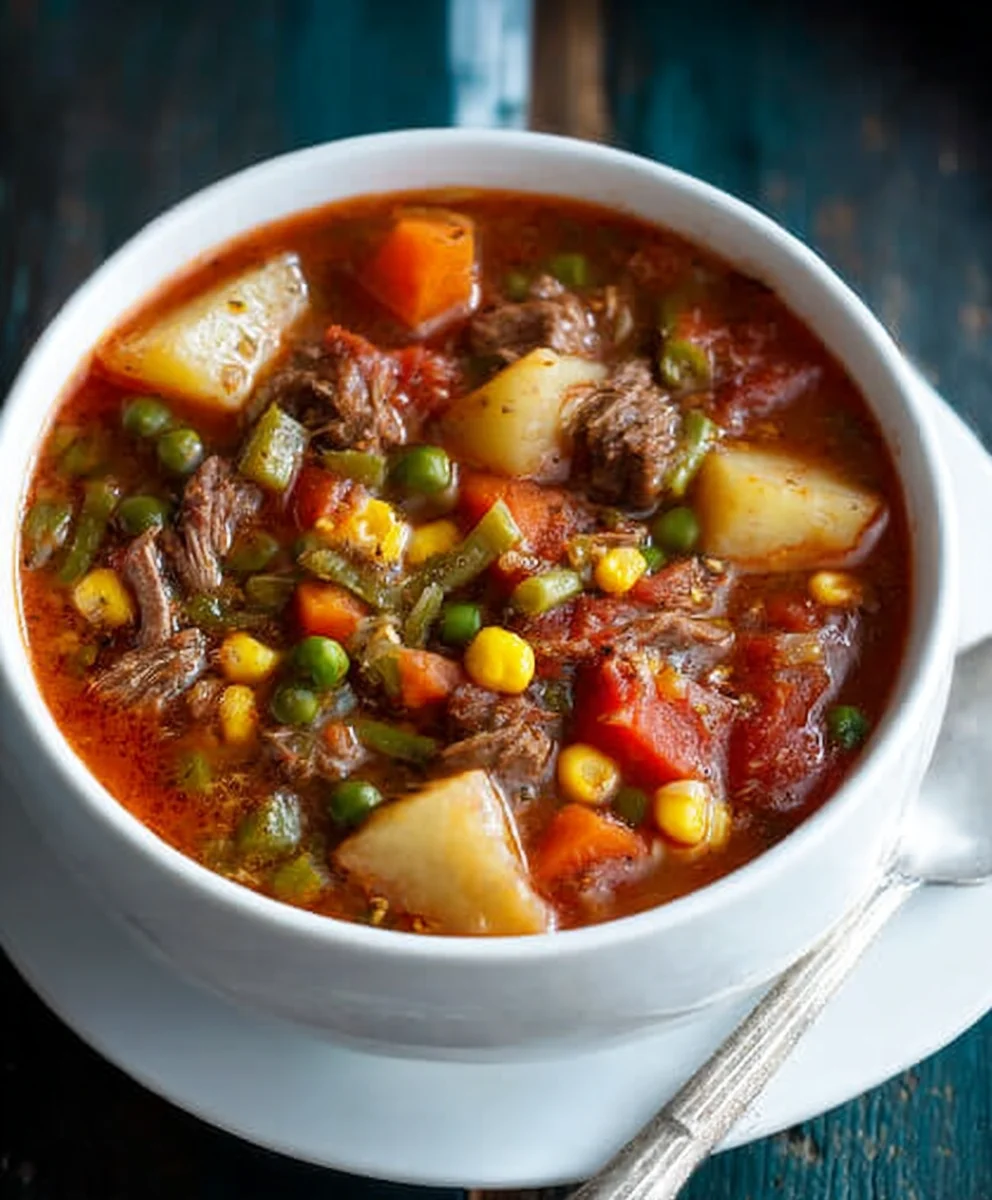
My Mom’s Old-Fashioned Vegetable Beef Soup is more than just a meal; it’s a warm hug in a bowl, a culinary time capsule that transports me straight back to my childhood kitchen. There’s a reason this hearty, comforting soup has been a family favorite for generations. It’s the perfect antidote to a chilly evening or a pick-me-up on a gloomy day, bursting with tender chunks of beef, an array of wholesome vegetables, and a rich, savory broth that’s been simmered to perfection. What makes My Mom’s Old-Fashioned Vegetable Beef Soup truly special is the love and care poured into every spoonful, the simple yet profound flavors that come together harmoniously. It’s a dish that nourishes both body and soul, reminding us of simpler times and the enduring power of home-cooked goodness. Get ready to rediscover this classic, and perhaps even make it your own family’s treasured recipe!
Ingredients:
- 1 pot roast (about 2 pounds)
- 2 russet potatoes, peeled and chopped into bite-sized pieces
- 1 bag frozen seasoning blend (often contains chopped onion, celery, and green bell pepper), or 2 cups chopped yellow onion if using fresh
- 1 bag frozen peas (about 10 oz)
- 1 bag frozen green beans (about 10 oz)
- 1 bag frozen corn (about 10 oz)
- 4 large carrots, peeled and chopped into ½-inch rounds
- 1 (32 oz) container beef broth
- 2 (10.75 oz) cans condensed tomato soup
- 1 can filled with water (use one of the empty tomato soup cans to measure)
- Salt, to taste
- Black pepper, to taste
Preparing the Pot Roast
Sear the Pot Roast
To begin extract crafting My Mom’s Old-Fashioned Vegetable Beef Soup, we’ll start with the star of the show: the pot roast. For the best flavor and a tender outcome, searing is key. I like to trim any excess fat from the pot roast, although a little bit of fat will add richness to the broth. Pat the roast completely dry with paper towels. This is a crucial step to ensure you get a beautiful brown crust. Season both sides generously with salt and freshly ground black pepper. Heat 2 tablespoons of vegetable oil (or any neutral cooking oil you prefer) in a large, heavy-bottomed pot or Dutch oven over medium-high heat until it’s shimmering but not smoking. Carefully place the seasoned pot roast into the hot oil and sear for about 4-5 minutes per side, until a deep, golden-brown crust has formed. This searing process locks in the juices and builds a fantastic foundation of flavor for your soup.
Building the Broth Base
Simmering the Roast and Aromatics
Once the pot roast is beautifully seared, remove it from the pot and set it aside on a plate. If you’re using a frozen seasoning blend, it’s usually best to add it after the roast has been removed to prevent it from getting too mushy too quickly. If you’re using fresh onions, add them to the pot now and sauté them in the rendered fat from the roast for about 5-7 minutes, stirring occasionally, untilgin extractey begin to soften and turn translucent. If the pot looks a bit dry, you can add another tablespoon of oil. Next, pour in the 32 oz container of beef broth. Scrape the bottom of the pot with a wooden spoon to loosen any browned bits – these are packed with flavor! Add the two cans of condensed tomato soup. The tomato soup adds a lovely depth and a slight tang that complements the beef and vegetables perfectly. Finally, use one of the empty tomato soup cans to measure and add one can of water. Give everything a good stir to combine.
The Heart of the Soup
Simmering the Pot Roast and Vegetables
Now it’s time to bring our pot roast back into the picture. Gently place the seared pot roast back into the pot with the broth mixture. Bring the liquid to a gentle simmer, then reduce the heat to low, cover the pot tightly, and let it cook. This initial simmering phase is where the magic happens. We want the pot roast to become incredibly tender. This can take anywhere from 1.5 to 2.5 hours, depending on the thickness and cut of your roast. You’ll know it’s ready when you can easily shred it with a fork. While the roast is tenderizing, prepare your vegetables. Peel and chop the russet potatoes and carrots as directed in the ingredients list. Make sure the potato pieces are roughly the same size for even cooking.
Adding the Vegetables
Incorporating Root Vegetables
After about 1.5 hours of simmering the pot roast, it should be getting nicely tender. It’s time to start adding some of our heartier vegetables. Carefully add the chopped russet potatoes and the chopped carrots to the pot. Ensure they are submerged in the liquid. If the liquid level seems a bit low, you can add another ½ cup to 1 cup of water or beef broth to make sure everything is covered. Continue to simmer, covered, for another 30-45 minutes, or until the potatoes and carrots are fork-tender. It’s important not to overcook them at this stage, as they will continue to soften as the other frozen vegetables are added.
Finishing Touches and Serving
Adding Frozen Vegetables and Shredding the Beef
Once the potatoes and carrots are tender, it’s time to add the remaining ingredients that cook quickly. Carefully remove the pot roast from the pot and place it on a cutting board. Add the bag of frozen peas, the bag of frozen green beans, and the bag of frozen corn to the simmering soup. These frozen vegetables will cook through in just about 10-15 minutes. While the vegetables are cooking, use two forks to shred the tender pot roast into bite-sized pieces. Don’t worry about getting it perfectly shredded; rustic chunks are part of the charm of this old-fashioned soup! Return the shredded beef to the pot. Stir everything gently to combine. Taste the soup and season with additional salt and freshly ground black pepper as needed. The amount of salt you’ll need will depend on the saltiness of your beef broth and tomato soup. Let the soup simmer for another 5 minutes to allow the flavors to meld together and the frozen vegetables to heat through. Serve hot, garnished with a little fresh parsley if you like, for a comforting and hearty meal.
Conclusion:
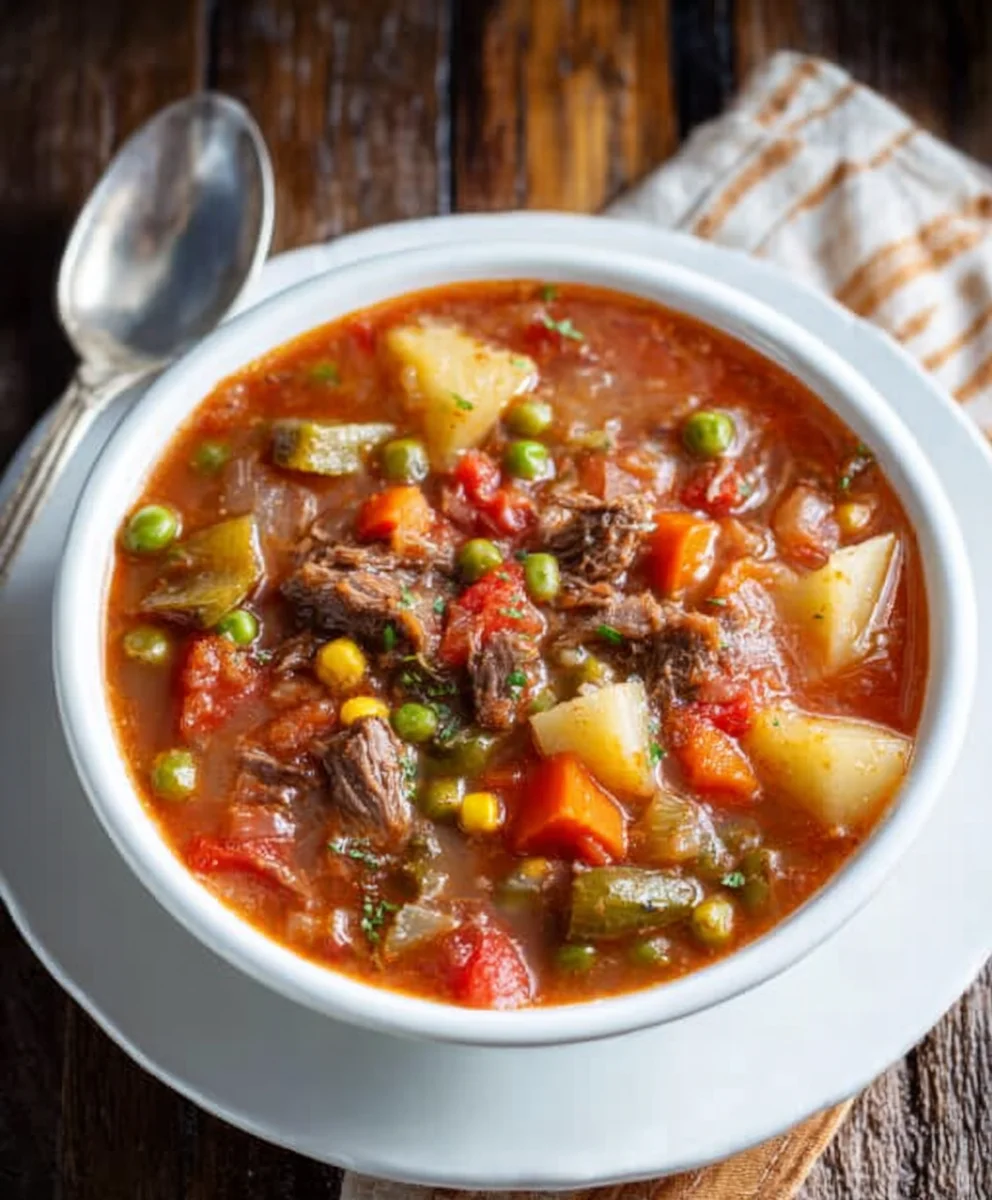
I hope you’ve enjoyed learning how to make My Mom’s Old-Fashioned Vegetable Beef Soup! This hearty and comforting soup is a true classic for a reason. It’s packed with tender chunks of beef, a medley of wholesome vegetables, and a rich, savory broth that’s perfect for a chilly evening or a nourishing lunch. The beauty of this recipe lies in its simplicity and the way the flavors meld together to create something truly special. It’s a dish that brings people together and evokes feelings of home and warmth.
When it comes to serving My Mom’s Old-Fashioned Vegetable Beef Soup, I love pairing it with crusty bread for dipping into that delicious broth. A simple side salad also makes for a complete and satisfying meal. Don’t be afraid to experiment with variations! You can add other root vegetables like parsnips or rutabaga, swap out beef for lamb, or even add a handful of barley for extra texture and heartiness. The key is to make it your own!
I encourage you to give My Mom’s Old-Fashioned Vegetable Beef Soup a try. It’s a recipe that’s sure to become a staple in your own cooking repertoire, bringin extractg smiles and satisfaction to everyone who enjoys it.
Frequently Asked Questions:
Can I make this soup ahead of time?
Absolutely! My Mom’s Old-Fashioned Vegetable Beef Soup actually tastes even better the next day as the flavors have more time to meld. Simply store it in an airtight container in the refrigerator for up to 3-4 days. Reheat gently on the stovetop.
What is the best way to cut the vegetables for this soup?
For My Mom’s Old-Fashioned Vegetable Beef Soup, it’s best to cut the vegetables into bite-sized, uniform pieces. This ensures they cook evenly and are easy to eat with a spoon. Aim for cubes of about 1/2 inch to 3/4 inch for the potatoes, carrots, and celery.
Mom’s Old-Fashioned Vegetable Beef Soup Recipe
A hearty and comforting old-fashioned vegetable beef soup made with a tender pot roast and plenty of fresh and frozen vegetables.
Ingredients
-
1 pot roast (about 2 pounds)
-
2 russet potatoes, peeled and chopped into bite-sized pieces
-
1 bag frozen seasoning blend (often contains chopped onion, celery, and green bell pepper), or 2 cups chopped yellow onion if using fresh
-
1 bag frozen peas (about 10 oz)
-
1 bag frozen green beans (about 10 oz)
-
1 bag frozen corn (about 10 oz)
-
4 large carrots, peeled and chopped into ½-inch rounds
-
1 (32 oz) container beef broth
-
2 (10.75 oz) cans condensed tomato soup
-
1 can filled with water (use one of the empty tomato soup cans to measure)
-
Salt, to taste
-
Black pepper, to taste
Instructions
-
Step 1
Trim excess fat from the pot roast, pat it dry, and season generously with salt and pepper. Heat 2 tablespoons of vegetable oil in a large pot or Dutch oven over medium-high heat. Sear the pot roast for 4-5 minutes per side until a deep golden-brown crust forms. -
Step 2
Remove the seared pot roast and set aside. If using fresh onions, sauté them in the pot for 5-7 minutes until softened. Pour in the beef broth, scraping the bottom to loosen browned bits. Add the condensed tomato soup and one can of water. Stir to combine. -
Step 3
Gently place the seared pot roast back into the pot. Bring to a simmer, then reduce heat to low, cover, and cook for 1.5 to 2.5 hours, or until the roast is tender and can be easily shredded with a fork. Prepare the potatoes and carrots while the roast simmers. -
Step 4
After about 1.5 hours of simmering, add the chopped potatoes and carrots to the pot. Ensure they are submerged. Add more broth or water if needed. Continue to simmer, covered, for another 30-45 minutes, or until the potatoes and carrots are fork-tender. -
Step 5
Remove the pot roast from the pot and place it on a cutting board. Add the frozen peas, green beans, and corn to the simmering soup. While the vegetables cook, shred the pot roast into bite-sized pieces. Return the shredded beef to the pot. -
Step 6
Stir everything gently to combine. Taste and season with additional salt and pepper as needed. Let the soup simmer for another 5 minutes for flavors to meld. Serve hot.
Important Information
Nutrition Facts (Per Serving)
It is important to consider this information as approximate and not to use it as definitive health advice.
Allergy Information
Please check ingredients for potential allergens and consult a health professional if in doubt.