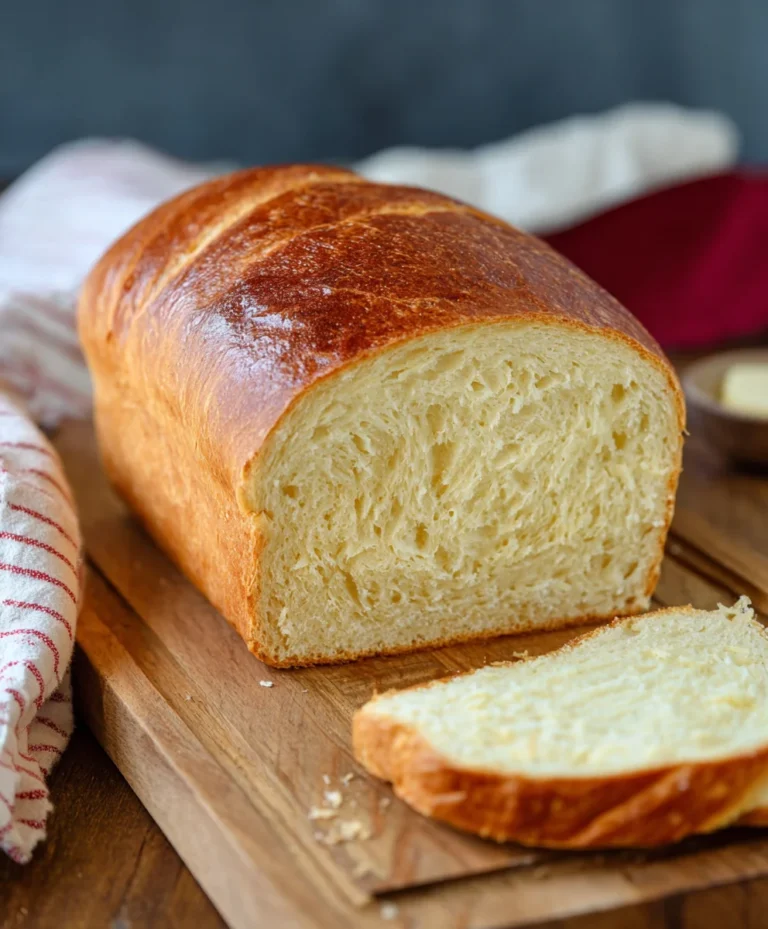
Flaky Homemade Croissants-Easy Recipe
Homemade Flaky Croissants Recipe beckons with the promise of buttery layers and a shatteringly crisp exterior. There’s a certain magic that unfolds when you transform simple ingredients into these iconic French pastries, a culinary journey that rewards patience and precision with unparalleled deliciousness. The allure of a perfect croissant lies in its delicate, airy interior, a stark contrast to its golden-brown, wonderfully crunchy shell. It’s this duality, this symphony of textures and rich, melt-in-your-mouth flavor, that makes them an absolute showstopper. Whether you’re a seasoned baker or an ambitious begin extractner, mastering this Homemade Flaky Croissants Recipe is a truly satisfying achievement. Get ready to fill your kitchen with the irresistible aroma of freshly baked perfection; this isn’t just a recipe, it’s an experience you’ll want to savor again and again.

Ingredients:
- 2 ¼ teaspoons (1 packet) instant yeast (active dry yeast also works)
- ½ cup water, room temperature
- 3 ½ cups all-purpose flour, plus 2 tablespoons for dusting
- ⅓ cup granulated sugar
- 2 teaspoons salt
- 1 cup whole milk (2% milk is also a good substitute)
- 1 large egg, beaten (for egg wash)
- 1 ½ cups (3 sticks) unsalted butter, slightly cool and cut into cubes
Preparing the Dough
Step 1: Activate the Yeast and Combine Dry Ingredients
First things first, let’s get our yeast going. In a small bowl, combine the room temperature water and the instant yeast. Give it a gentle stir and let it sit for about 5-10 minutes. You should see it start to get foamy and bubbly. This is a sign that the yeast is alive and ready to work its magic! While that’s happening, in the bowl of your stand mixer (or a large mixing bowl if you’re doing this by hand), whisk together the 3 ½ cups of all-purpose flour, granulated sugar, and salt. Make sure these dry ingredients are well combined before we add the wet ones. This even distribution is key for consistent flavor throughout your croissants.
Step 2: Mix and Knead the Dough
Once your yeast is foamy, add it to the dry ingredients along with the whole milk. If you’re using a stand mixer, attach the dough hook and mix on low speed until the ingredients just start to come together. Then, increase the speed to medium-low and let it knead for about 5-7 minutes. The dough should become smooth and elastic. If you’re kneading by hand, turn the dough out onto a lightly floured surface and knead for about 10-12 minutes, until it reaches that same smooth, elastic consistency. It should feel pliable and spring back slightly when you poke it. Don’t be tempted to add too much extra flour; a slightly sticky dough is better than a dry one for flaky results.
Step 3: First Rise and Butter Block Preparation
Now, place your kneaded dough into a lightly oiled bowl, turning it to coat. Cover the bowl tightly with plastic wrap and let it rise in a warm place for about 1 to 1 ½ hours, or until it has doubled in size. While the dough is rising, it’s time to prepare our butter block. Take your slightly cool unsalted butter sticks and place them between two sheets of parchment paper. Using a rolling pin, pound and roll the butter into a rectangle approximately 6×9 inches. Don’t worry if it’s not perfectly uniform; some variations are fine. The key is to keep the butter cool but pliable, not melted. Once you have your rectangle, slide it into the refrigerator to chill until firm. This butter block is crucial for creating those signature flaky layers.
Laminating the Dough
Step 4: Incorporate the Butter and First Fold (Single Fold)
Once the dough has doubled in size, punch it down gently and turn it out onto a lightly floured surface. Roll the dough into a rectangle about 12×18 inches. Place the chilled butter block on one half of the dough, leaving a small border. Fold the other half of the dough over the butter, like closing a book. Press the edges to seal the butter inside, ensuring no leaks. Now, carefully roll out the dough into a long rectangle, about 8×24 inches. Brush off any excess flour. This is where the magic of lamination begin extracts. Perform a “single fold” by folding the dough into thirds: bring one-third of the dough over the center, then fold the remaining third over that, creating a neat package. Wrap this dough tightly in plastic wrap and refrigerate for at least 30 minutes. This chilling period is vital for the butter to firm up again, which prevents it from melting into the dough and ensures distinct layers.
Step 5: Second and Third Folds (Double Folds)
After the dough has chilled, place it back on your lightly floured surface with the folded edge to your left. Roll it out again into a long rectangle, approximately 8×24 inches, brushing off any excess flour. For the second fold, we’ll do a “double fogin extract” Imagine dividing the dough into four equal sections. Fold the bottom quarter up towards the center, then fold the top quarter down over that. You should have a package that looks like a folded letter. Again, wrap this tightly in plastic wrap and refrigerate for at least another 30 minutes. Repeat this entire process one more time: roll out the chilled dough into an 8×24 inch rectangle, brush off excess flour, and perform another double fold. After this third fold, wrap the dough tightly and refrigerate for at least 1 hour, or ideally overnight. This extended chill allows the gluten to relax completely, making the dough easier to work with and resulting in superior flakiness.
Shaping and Baking
Step 6: Shaping the Croissants
Once your dough has had its final chill, take it out and let it sit at room temperature for about 10-15 minutes to make it slightly more pliable, but still cool. On a lightly floured surface, roll the dough into a large rectangle, about 10×20 inches and roughly 1/4 inch thick. Trim the edges to create clean lines. Then, cut the rectangle into two equal halves lengthwise. Take one half and cut it into triangles. For classic croissants, aim for triangles that are about 4 inches at the base and 6 inches tall. Make a small slit, about ½ inch, in the center of the base of each triangle. Gently stretch the dough triangle from the slit outwards, which helps create those signature curves. Then, starting from the base, roll the triangle up towards the point. Don’t roll too tightly; you want to leave room for the layers to puff up during baking. Curve the ends inwards to form the classic crescent shape. Place the shaped croissants on a baking sheet lined with parchment paper, leaving plenty of space between them as they will expand.
Step 7: Final Proof and Baking
Cover the shaped croissants loosely with plastic wrap and let them proof in a warm place for another 1 to 1 ½ hours, or until they are visibly puffy and slightly jiggly. During this proofing stage, the butter layers will separate further, creating pockets of steam that will lead to flakiness. While they are proofing, preheat your oven to 375°F (190°C). Once the croissants have finished their final proof, gently brush the tops with the beaten egg wash. This egg wash will give them a beautiful golden-brown sheen and an irresistible shine once baked. Bake for 15-20 minutes, or until the croissants are deeply golden brown and sound hollow when tapped on the bottom. Keep an eye on them as ovens can vary. If they start browning too quickly, you can loosely tent them with aluminum foil. Let them cool on a wire rack before enjoying their exquisite flakiness.

Conclusion:
There you have it! You’ve now got the blueprint for creating your very own Homemade Flaky Croissants Recipe. We’ve walked through the meticulous process of laminating dough, shaping delicate crescents, and achieving that signature golden-brown perfection. While it requires patience and precision, the reward of biting into a warm, buttery, and incredibly flaky croissant you made yourself is truly unparalleled. These beauties are not just a breakfast treat; they can elevate any meal. Imagin extracte them served alongside a light salad for lunch, or with a dollop of jam and crème fraîche for a delightful afternoon snack. Don’t be afraid to experiment with the dough – perhaps adding a pinch of cinnamon and sugar before shaping for a sweet twist, or even incorporating a bit of finely chopped herbs for a savory option.
We encourage you to embrace the journey of making these Homemade Flaky Croissants Recipe. Don’t be discouraged if your first attempt isn’t café-perfect. Every baker’s journey starts with a learning curve, and with each batch, you’ll refine your technique and grow more confident. The aroma that will fill your kitchen is worth every step. So, gather your ingredients, put on some calming music, and get ready to create a truly special baked good.
Frequently Asked Questions:
Why are my croissants not flaky?
Achieving flakiness in your Homemade Flaky Croissants Recipe is all about the butter and the layers. Ensure your butter is well-chilled throughout the entire process, as this is what creates steam pockets during baking. Also, make sure you’re performing enough folds (typically three single or a combination of single and double folds) to build up a sufficient number of thin butter and dough layers. Overworking the dough can also make it tough rather than flaky, so handle it gently.
Can I make the dough for Homemade Flaky Croissants Recipe ahead of time?
Absolutely! The dough for your Homemade Flaky Croissants Recipe benefits greatly from chilling. You can prepare the dough and complete the first few folds, then refrigerate it for up to 24-48 hours. This allows the gluten to relax, making it easier to roll out and shape. Just be sure to let it come to room temperature slightly before proceeding with the remaining folds and shaping steps.
Flaky Homemade Croissants-Easy Recipe
Learn how to make incredibly flaky and delicious homemade croissants with this easy-to-follow recipe. Perfect for a weekend baking project!
Ingredients
-
2 ¼ teaspoons (1 packet) instant yeast
-
½ cup water, room temperature
-
3 ½ cups all-purpose flour, plus 2 tablespoons for dusting
-
⅓ cup granulated sugar
-
2 teaspoons salt
-
1 cup whole milk
-
1 large egg, beaten
-
1 ½ cups (3 sticks) unsalted butter, slightly cool and cut into cubes
Instructions
-
Step 1
Activate yeast by combining it with room temperature water and letting it sit for 5-10 minutes until foamy. In a separate bowl, whisk together flour, sugar, and salt. -
Step 2
Add the foamy yeast mixture and milk to the dry ingredients. Mix and knead until the dough is smooth and elastic (5-7 minutes with a stand mixer, 10-12 minutes by hand). Place in a lightly oiled bowl, cover, and let rise for 1-1.5 hours until doubled. While dough rises, prepare the butter block by pounding and rolling cool butter into a 6×9 inch rectangle between parchment paper, then chill until firm. -
Step 3
Punch down the risen dough and roll it into a 12×18 inch rectangle. Place the chilled butter block on one half, fold the other half over to enclose it, and seal the edges. Roll this out into an 8×24 inch rectangle and perform a ‘single fold’ by folding it into thirds. Wrap and refrigerate for at least 30 minutes. -
Step 4
Perform a ‘double fold’: roll the chilled dough into an 8×24 inch rectangle, fold the bottom quarter up to the center, and then the top quarter down over that, like a letter. Wrap and refrigerate for at least 30 minutes. Repeat this double fold process one more time, then wrap and refrigerate for at least 1 hour or overnight. -
Step 5
Roll the final chilled dough into a 10×20 inch rectangle, about 1/4 inch thick. Trim edges and cut into two equal halves lengthwise. Cut each half into triangles (about 4 inches at the base and 6 inches tall). Make a small slit in the base of each triangle, gently stretch, and roll up from the base towards the point. Curve the ends to form crescent shapes. Place on a parchment-lined baking sheet. -
Step 6
Cover the shaped croissants loosely and let them proof in a warm place for 1-1.5 hours until puffy. Preheat oven to 375°F (190°C). Brush the proofed croissants with beaten egg wash. Bake for 15-20 minutes until deeply golden brown. Cool on a wire rack before serving.
Important Information
Nutrition Facts (Per Serving)
It is important to consider this information as approximate and not to use it as definitive health advice.
Allergy Information
Please check ingredients for potential allergens and consult a health professional if in doubt.